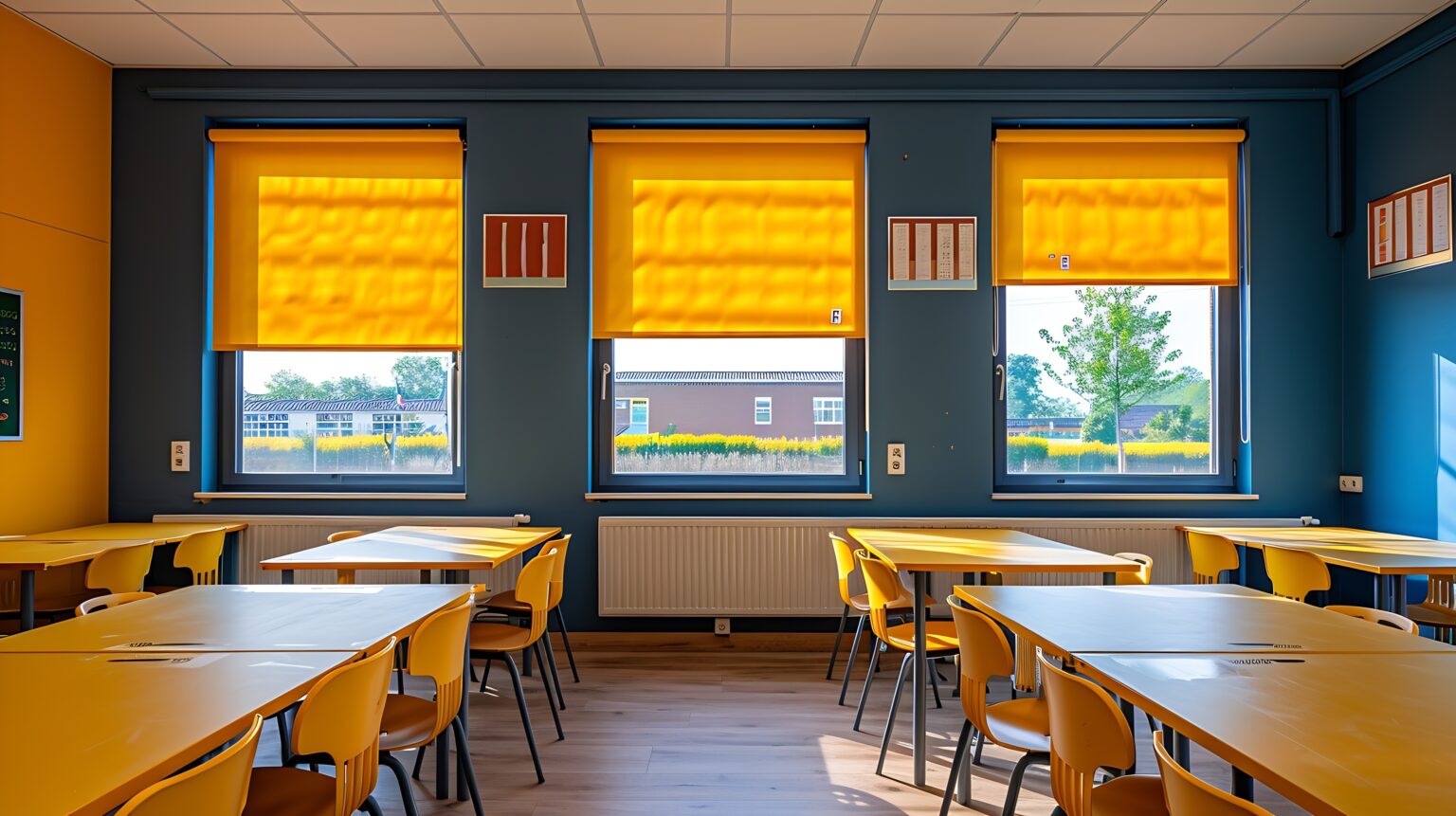
In the design and maintenance of educational facilities, window coverings are often viewed through a purely functional lens. However, for headteachers, local authorities, and architects, the specification of these systems is a critical factor in creating a safe, productive, and legally compliant learning environment. In the dense urban landscape of London, where schools range from multi-storey Victorian blocks to contemporary glass-fronted academies, the challenges of light control, safety, and durability are magnified.
Prioritising Safety and Regulatory Compliance in the Classroom
The paramount concern in any school environment is the safety of the students. This is not merely a preference but a strict legal obligation. The primary regulation governing this area is BS EN 13120, which sets out the requirements for internal blinds to be “safe by design.” For primary schools and nurseries in particular, the risk posed by looped cords and chains is significant.
Professional specification involves moving toward cordless or tensioned systems. Crank-operated roller blinds or wand-controlled vertical blinds are frequently recommended because they remove the hazard entirely. Furthermore, fire retardancy is a non-negotiable requirement. All fabrics must comply with BS 5867 Part 2, ensuring they do not contribute to the spread of flame in the event of an emergency. For specialist settings, such as SEN (Special Educational Needs) units, additional considerations like anti-ligature hardware must be factored into the initial design.
Balancing Natural Light with Digital Visibility
Modern pedagogy relies heavily on technology. From interactive whiteboards to individual tablets, the presence of screens in the classroom makes glare a significant barrier to learning. Effective window treatments must harvest natural daylight—essential for student well-being and circadian rhythms—while simultaneously eliminating the “veiling reflection” that renders screens unreadable.
This balance is often achieved through the use of high-performance screen fabrics with a specific openness factor (typically 3% to 5%). These materials allow a view of the outside world while diffusing direct sunlight. Conversely, in science laboratories, assembly halls used for theatre, or IT suites, a full blackout solution may be required. These systems often utilise side channels to eliminate light leakage, providing the total darkness necessary for high-contrast projection.
Durability Requirements for High-Traffic Educational Settings
A classroom blind is subjected to significantly more wear and tear than its domestic counterpart. It must withstand high-frequency use by both staff and students, often with varying degrees of care. Specifying retail-grade solutions in an educational setting is a false economy; these systems frequently fail under the pressure of a school term.
Heavy-duty, commercial-grade components are essential. This includes robust aluminium headrails and high-torque gearboxes. Fabric choice is equally vital; wipe-clean, anti-microbial, and moisture-resistant materials are preferred to maintain hygiene standards and ensure the longevity of the installation.
Managing the Logistical Challenges of Installations in the Capital
Executing a large-scale project in a London school requires more than just technical skill; it requires meticulous logistical planning. Unlike other commercial sectors, school installations are heavily dictated by the academic calendar. Contractors must be able to deploy large, experienced teams during half-term or summer holidays to ensure zero disruption to teaching.
Furthermore, in a metropolitan environment, factors such as ULEZ compliance, parking permits, and secure site access are significant hurdles. It is essential that all installation staff are fully DBS-checked and familiar with the specific safeguarding protocols of educational sites.
For those seeking a comprehensive, end-to-end service—from initial site survey and laser measurement to the final fitting—the specialised blinds for schools fitting service at Kellys Blinds (https://kellysblinds.co.uk/commercial-blinds/schools/) offers a template for how these complex projects should be managed. By aligning with a partner that understands the intersection of London’s logistical demands and the education sector’s safety requirements, school leaders can ensure their facilities are both functional and future-proof.