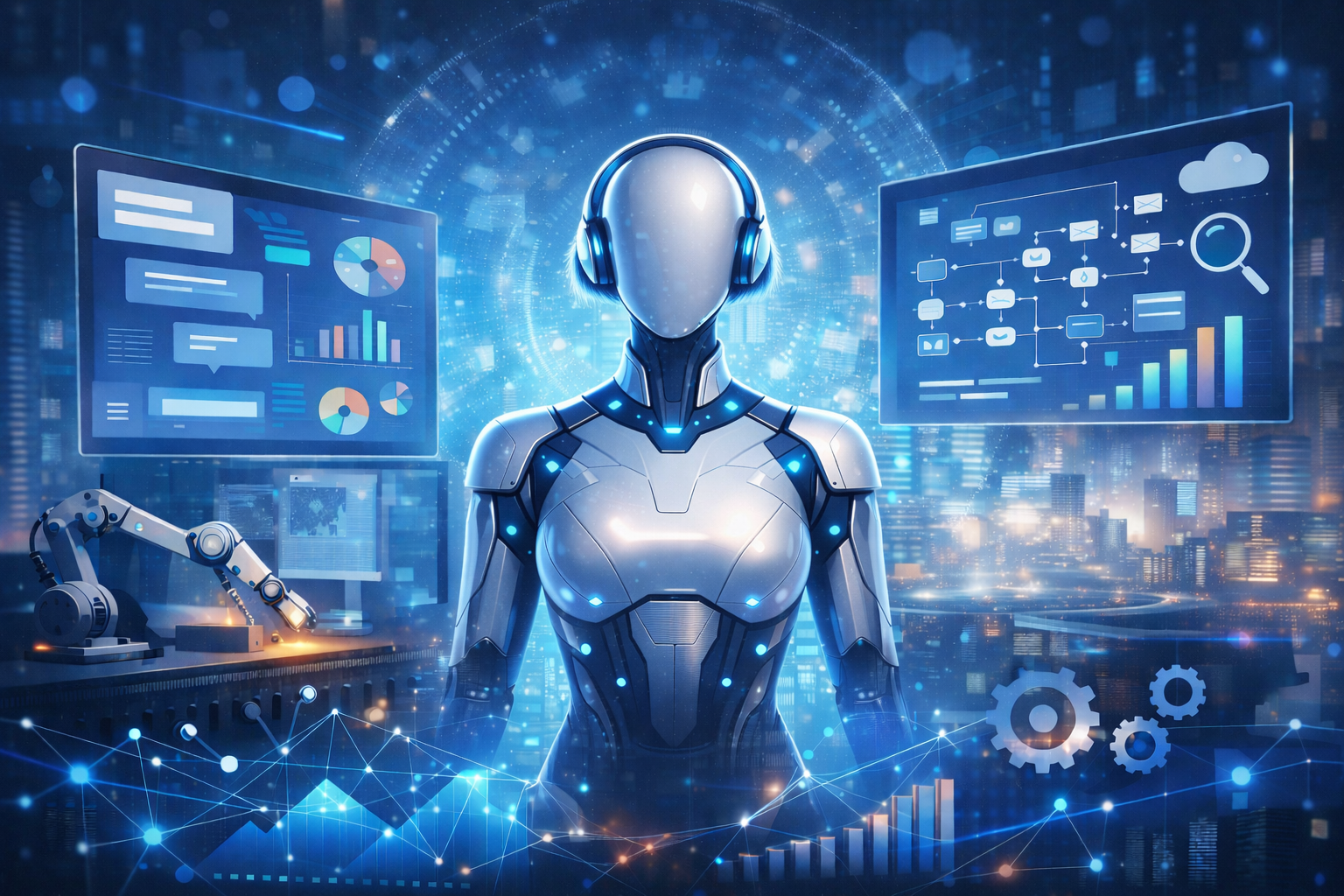
Artificial intelligence is evolving quickly, and automation is evolving with it. Not long ago, most automated systems were limited to scripted chatbots or simple rule-based workflows. They could answer predefined questions but struggled with anything unexpected.
Today, businesses are looking for something more flexible. Instead of rigid automation, they want systems that can understand context, assist customers, and support real operational tasks.
This shift explains the growing interest in an AI agent builder. Rather than relying on static scripts, companies can create intelligent digital agents that interact with customers, support sales teams, and help manage everyday processes.
In other words, automation is no longer just about saving time. It is becoming a way to build smarter digital workflows.
What Is an AI Agent Builder?
AI agent builder refers to a platform that enables businesses to create, configure, and deploy intelligent digital agents capable of handling tasks such as customer communication, workflow automation, and data-driven decision support.
In practice, an AI agent builder acts as the environment where businesses design and manage automated agents. These agents are typically powered by machine learning models and natural language processing technologies.
Instead of building complex automation infrastructure from scratch, teams can configure how their agents respond to users, interpret information, and trigger actions.
Imagine an online store receiving hundreds of product questions each day. A digital agent built through an AI agent builder could answer those questions, suggest relevant items, and direct more complex inquiries to the appropriate team.
LoOver time, these systems can improve through interaction data. As the agents handle more conversations, they become better at recognizing patterns and responding more accurately.
The biggest advantage is adaptability. Rather than forcing businesses to follow rigid automation structures, an AI agent builder allows automation to adapt to the way the business actually works.
How AI Agents Are Changing Customer Interaction
Communication has changed hugely in the last few years, and people don’t want to speak to a robot, they want a human, they want things faster, they want it easier and they want it as a human being and not a bot. Ai agents will start impacting here straight away. Not your standard ops automation tool, AI agents are contextual and they can interpret intent and how to respond naturally.
For instance, suppose a customer has an inquiry about a product and sends a message to the brand. Instead of receiving a generic automated reply, an AI agent could provide meaningful product information, recommend similar items, or even steer users toward purchasing.
The benefit to businesses is that AI agents can keep chats quick and human teams can navigate thornier questions that need judgment and expertise.
Why AI Agent Tools Matter for Modern Automation
Intelligent automation is rarely powered by just one technology and often consists of myriad systems and tools interacting to bring about the ultimate desired automation result. AI agent tools can be seen as the technologies that enable intelligent automation systems to function. They typically combine features such as natural language processing, workflow automation, CRM integrations, and conversation analytics.
For example, an AI agent might handle conversations across several platforms at once—answering questions on a website, assisting customers in messaging apps, and responding on social media channels.
Without centralized tools, businesses often manage each channel with separate systems. AI agent tools bring these interactions together, helping teams keep communication consistent across platforms while gaining clearer insights through analytics.
Another advantage is visibility. Analytics tools provide insights into how conversations unfold, which interactions lead to conversions, and where automation can be improved.
Building Scalable Automation with an AI Agent Builder
Scalability is one of the main reasons companies invest in an AI agent builder.
Traditional automation systems often become difficult to manage as a company grows. New workflows, new communication channels, and increasing customer inquiries can quickly overwhelm rigid systems.
AI Agents and the Future of Customer Communication
Customer expectations across digital channels continue to rise. People expect quick answers, personalized interactions, and consistent communication no matter where a conversation begins.
AI-powered agents help businesses meet those expectations more effectively. Instead of waiting in support queues, customers can receive assistance almost instantly. At the same time, human teams can focus on conversations that truly require empathy, judgment, or complex problem-solving.
This hybrid model—where intelligent automation supports human interaction—is increasingly becoming the backbone of modern customer experience strategies. Organizations that adopt this approach often discover they can handle higher volumes of communication while still maintaining service quality.
Conclusion
Automation is entering its next phase. Companies are no longer restricted to basic rule-based tools that automate simple tasks. Thanks to an AI agent builder, organizations can create smart workflows that respond to user actions, assist in communicating with customers, and scale as fast as their business can grow.
As these technologies develop, organizations that invest in these systems today will be better equipped for the future of digital communication and automation.