If you run a tiny brand in Britain in 2025, your product photos are probably doing more selling than you are. Customers now scroll through marketplaces and Instagram shops at speed, pausing for whatever looks trustworthy and well made. Studies suggest that around 90 per cent of online buyers say image quality influences their decision more than price or reviews, which makes photos one of the strongest single levers a small brand can pull.
The numbers behind that are hard to ignore. A survey of online businesses by Shopify found that products with professional-quality photos saw conversion rates rise by roughly a third compared with low-quality images. Another analysis of e-commerce stores reported that high-quality product photos were linked to conversion rates almost twice as high as poor-quality ones. In other words, for the same traffic, better pictures can mean many more orders without spending extra on ads.
At the same time, the cost of getting those “better pictures” has become a major headache. The UK’s Business Perceptions Survey notes that firms are still operating in a cost of living crisis, with higher material and energy prices squeezing margins. An insurance risk index found that 32 per cent of UK organisations now name the cost of living crisis as their top business risk, while separate research shows more than half of SMEs are seeing reduced profits. For micro-brands, that translates into a simple reality: the budget for a traditional studio shoot often just is not there. The result is a wave of kitchen-table creativity.
Key point
Product photos have become one of the most powerful sales tools for indie brands, but cost of living pressures are forcing those brands to reinvent how they shoot them.
Why product photos matter more than ever for small brands
For a small label or side-hustle, imagery does several jobs at once. On a marketplace listing, the main photo must stop the scroll and signal quality in a single glance. On a brand site, a sequence of images has to communicate texture, fit and scale in place of a fitting room or shop floor. On social feeds, those same products need to sit comfortably alongside lifestyle content without feeling like hard ads.
Research from digital marketing and retail analysts supports what many founders feel instinctively: clear, well-composed images lift sales, but they also reduce returns. One summary of recent studies suggests that a significant share of returns are driven by items looking different in person compared with their photos. When colours, textures and proportions are represented honestly, customers are less likely to feel misled and more likely to come back.
For indie brands, strong imagery is also a trust signal. A tiny skincare label from Leeds or a vintage reseller in Glasgow does not have decades of brand equity behind it. High-quality, consistent photos hint that someone cares about the details. They suggest that the brand will probably care about packing, customer service and ingredients as well. In crowded categories such as candles, jewellery or second-hand streetwear, that sense of “this looks put together” is often what earns the click.
Many small founders also use photos to bridge the gap between e-commerce and social proof. Real-life customer shots, behind-the-scenes snaps and try-on videos help people see how a garment hangs or how a mug looks on an actual table, not in a white void. When those assets are shot thoughtfully, they pull double duty as marketing and as reassurance.
Key point
Good product photos do more than decorate a listing. They reduce returns, build trust and make new, unknown brands feel credible in seconds.
From stock sheen to kitchen-table realism
Scroll through UK independent brands on marketplaces and you can spot a shift. The slick, almost clinical stock look is giving way to something more domestic and grounded. A vintage seller in Manchester might shoot dresses on friends in their flat, with a real hallway or stairwell as the backdrop. A sustainable skincare brand in Bristol might show jars on a bathroom shelf with steam still on the mirror, rather than on reflective acrylic.
Part of this is cost, but part of it is taste. Consumers who have grown up online often recognise stock pictures instantly and discount them. Many indie founders report that when they replaced generic mockups with honest, slightly imperfect photos shot at home, engagement and saves went up. It fits a wider move towards “real” models: people of varied sizes, genders and ages wearing the clothes or using the products in believable settings.
Take the example of a small London-based clothing label that used to rely heavily on supplier lookbook images. Once they began photographing garments on friends in a local park and on the sofa at home, their pieces started to look achievable rather than aspirational. The clothes creased, the light changed, and you could see how a dress behaved when someone sat down. Those details made the images feel less like ads and more like recommendations from a stylish mate.
Crucially, the indie brands that make this work are not abandoning craft. They are borrowing some of the discipline of commercial photography and applying it at domestic scale: thinking about how colours interact, where the eye lands first and how a thumbnail will read on a phone. The settings may be ordinary, but the composition is not random.
Key point
Kitchen-table shoots work when they are deliberately composed. Real spaces and real models help, but they still need a photographer’s eye.
Lighting, backgrounds and framing on a shoestring
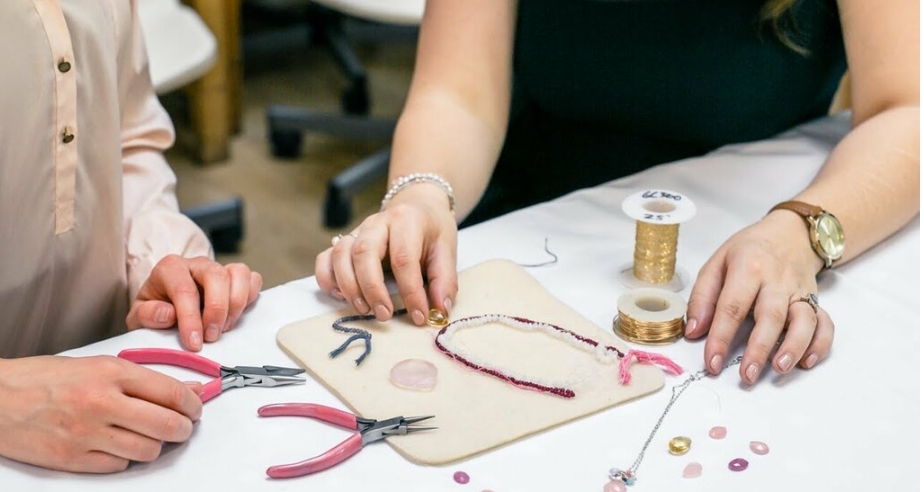
The biggest upgrade most small brands can make to their product photos is not a new camera. It is better control of light and background. Natural light is still the most accessible tool. A north-facing window or a shaded spot outside gives a soft, even light that flatters surfaces and colours. Shooting at the same time of day for each drop helps keep collections consistent, even if the set-up is simple.
Backgrounds do not need to be expensive either. Many indie sellers use a rotation of neutral backdrops: a sheet of white card, a linen tablecloth, a painted board or a section of clean wall. The trick is to keep texture subtle so it supports the product rather than competing with it. For jewellery or small ceramics, elevating items slightly on an upturned box or stack of books can stop them blending into a flat surface.
Framing is where a bit of discipline pays off. Founders who treat their kitchen as a studio often work through a shot list: one clean front-on image for marketplaces, one lifestyle shot in context, one close-up of texture or print, and one angle that shows size relative to a hand or everyday object. Simple edits such as a quick image crop and a gentle brightness adjustment often do more for clarity than heavy filters or complex retouching.
Key point
Consistent natural light, calm backgrounds and planned framing matter more than owning a high-end camera for most indie product shoots.
A simple toolbox for consistent online listings
Once the photos are captured, the quiet work of standardising them begins. Markets and platforms all have their own preferred image dimensions and aspect ratios, and mixing square, portrait and landscape shots at random can make even good products look messy in a grid. This is where indie brands are building lightweight editing routines that they can repeat for every drop.
For many, the essentials are straightforward: basic exposure and colour tweaks, dust removal and reliable cropping. An intuitive editor that makes it easy to apply an image crop with fixed ratios helps founders strip out distracting background details and line up products neatly. A ring of clutter around a candle or a pile of washing behind a pair of trainers is enough to weaken an otherwise strong shot.
Standardising aspect ratios also matters for marketplaces. Platforms that show search results in neat grids tend to reward images that fill the frame predictably without cutting off key details. Small sellers will often keep a template of their preferred crop in mind for each category: close and square for jewellery, slightly wider for shoes, and more generous breathing room for apparel so hems and cuffs are never trimmed.
Indie brands that photograph clothing on real people have discovered that editing is also about fairness to the model. Building a simple routine that covers exposure, white balance and an image crop to centre the body means that every model, regardless of shape or size, is shown with the same degree of care. That consistency quietly communicates respect and helps customers focus on fit and design rather than on distracting differences between images.
Key point
A repeatable editing workflow, including consistent cropping and aspect ratios, makes small brands look far more established across marketplaces and social feeds.
What this approach changes for UK indie brands
The shift to kitchen-table shoots and real models is not just an aesthetic fad. It is a practical response to a tough economic climate that still manages to serve customers better. Instead of cutting back on imagery altogether, indie founders are learning to direct and light their own shoots, then polish the results with a modest toolkit.
For UK micro-brands, that has several knock-on effects. First, it lowers the barrier to entry. A side-hustler who can turn a Saturday afternoon and a friend with a smartphone into a coherent product drop is no longer locked out by studio day rates. Second, it tightens the feedback loop. When founders shoot, edit and publish their own photos, they see directly which angles and contexts resonate, and they can adjust much faster than if every change required a new booking.
Perhaps most importantly, this DIY model reinforces the intimacy that draws people to small brands in the first place. Customers are not just buying a candle or a jacket. They are buying into someone’s taste, values and work. Authentic, well-composed photos from ordinary homes and streets underline that relationship.
FAQ
Do I need a professional camera to improve my product photos?
Not necessarily. For many indie brands, a modern smartphone, good natural light and careful framing are enough to produce sharp, trustworthy images.
How many photos should I show for each product?
Aim for at least three or four: a clean front-on shot, a lifestyle or context image, a close-up of texture or detail and one that makes scale clear.
Is it better to use models or mannequins for clothing?
Real people usually help customers imagine fit and movement more accurately, especially when you show a range of body types and keep the styling simple.
How often should I refresh my product photos?
You do not need to reshoot every season, but consider updating key bestsellers when you improve your set-up, add new colours or notice that older images look inconsistent.
What is the most important single change I can make right now?
Choose one reliable shooting spot with good daylight, tidy backgrounds and a repeatable set-up. Consistency from shot to shot will immediately make your shop look more coherent.