Faxing remains an indispensable tool for many industries due to compliance and security requirements. However, the method of faxing has undergone a significant transformation, transitioning from traditional machines to sophisticated digital platforms like InterFAX. Continue reading to learn how the digital transformation is influencing the enterprise fax landscape and what the future may hold.
The Rise of Digital Transformation in Enterprise Communication

Alt text: Busy office where employees are using enterprise fax solutions.
The movement toward digital transformation has been incremental but decisive, with companies adopting new strategies to streamline their communication channels. In the realm of enterprise communication, this shift has necessitated a departure from legacy systems to more adaptive and efficient platforms. As such, digital transformation encompasses new technologies and also the reimagining of business processes and models to better align with the digital age.
As part of this transformation, online fax solutions have embraced digital infrastructures, allowing for more seamless integration with other business applications. This integration facilitates the automation of workflows, ensuring that faxes can be sent, received, and managed with the same level of ease as other digital communications. The impact of these changes is far-reaching, influencing how organizations handle document transmission and management, customer service, and even compliance adherence.
Assessing the Shift From Traditional Fax To Cloud-Based Solutions
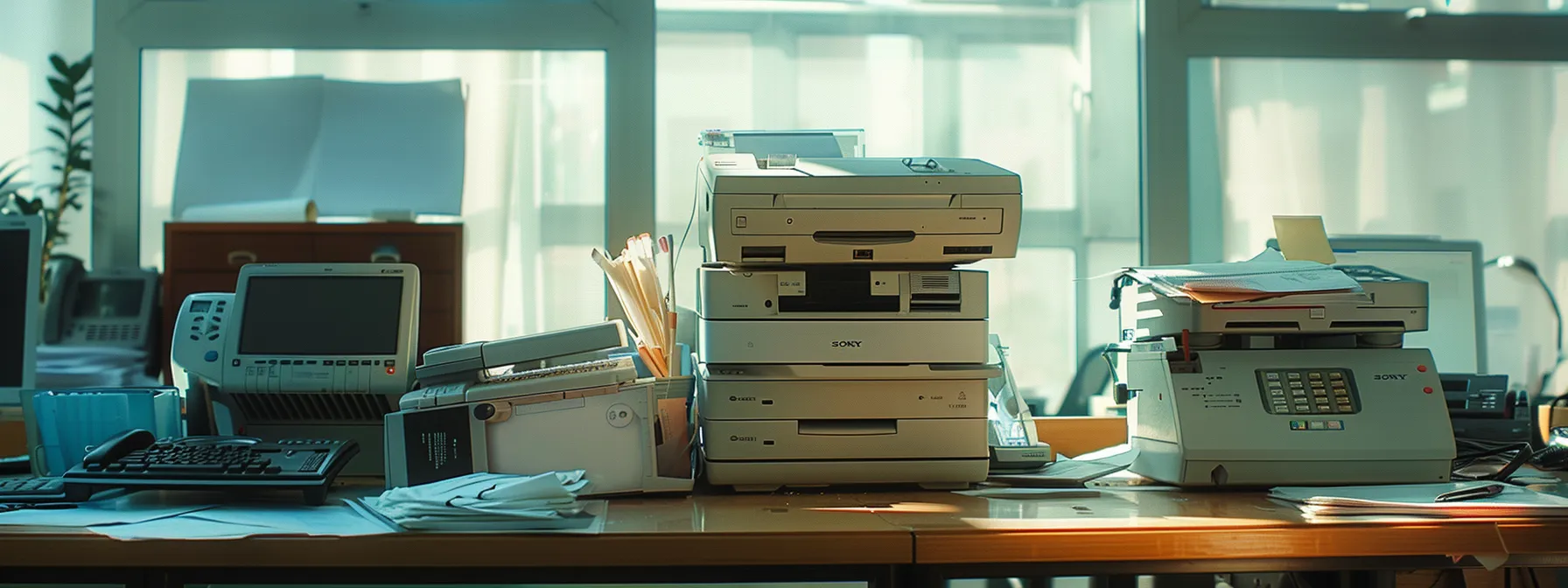
Alt text: An outdated fax machine is on a desk, which will soon be replaced by enterprise fax software.
The gradual obsolescence of traditional fax machines is a testament to the evolution of enterprise communications. These bulky, resource-intensive devices are being outpaced by agile, cloud-based fax solutions, which offer greater scalability and efficiency. Instead of maintaining physical phone lines and hardware, companies now opt for online services that reduce costs and environmental footprints.
With cloud-based platforms, fax services have grown to become more robust and adaptable. Hassles over hardware maintenance, paper supplies, and space constraints have given way to virtual environments where documents are securely transmitted with just a few clicks. This shift simplifies the entire faxing process and reinforces disaster recovery plans through cloud storage capabilities.
One significant advantage of cloud-powered fax services is the extensible infrastructure they provide. Organizations with fluctuating transmission volumes find value in the scalability of cloud solutions, which can effortlessly adjust to changing demands without the need for upgrading tangible assets. Moreover, such platforms often come with dedicated support and advanced analytics, enhancing control over faxing activities and offering insights for better decision-making.
Security and Compliance in the New Age of Faxing Services
Security concerns and regulatory compliance are at the forefront of any discourse pertaining to enterprise communication systems. The digital age has elevated risks associated with data breaches, making it paramount for companies to invest in secure communication platforms. In line with this, cloud-based fax services have fortified their offerings with advanced security measures to protect sensitive information during transmission and storage.
Encrypted data transmission and storage are just starting points for modern fax solutions. Providers of cloud fax services are keenly aware of the varied compliance demands across industries, from healthcare’s HIPAA requirements to the financial sector’s SOX obligations. These platforms are thus tailored to meet and maintain the highest standards of compliance, creating a secure, audit-friendly environment for businesses.
The security infrastructure of cloud fax services typically includes safeguards such as secure socket layer (SSL) and transport layer security (TLS) protocols, two-factor authentication, and controlled user permissions. This level of security, coupled with compliance adherence, ensures that enterprises can confidently transmit sensitive documents without fear of compromising proprietary or personal information.
The Role of Automation and Integration in Modern Fax Technology
Automation has become a linchpin of modern business processes, and fax technology is not immune to this trend. By embracing automated solutions, companies can significantly expedite document workflows, reducing manual input errors and freeing up valuable staff time for more strategic tasks. This focus on efficiency is driving the increased adoption of integrated fax technologies that can communicate effectively with other business systems.
APIs play a critical role in the seamless integration of fax services with other enterprise software systems, like CRM and ERP solutions. This interconnectedness guarantees that faxes can be sent and received within the native applications that employees use daily, streamlining operations and heightening productivity. As a direct consequence, businesses are better equipped to respond to customer inquiries, process orders, and execute agreements.
Overall, the digital transformation of enterprise faxing services has brought about a renaissance in document transmission and management. As companies embrace cloud, automation, and integration, they are discovering new efficiencies and bolstering their compliance strategies.