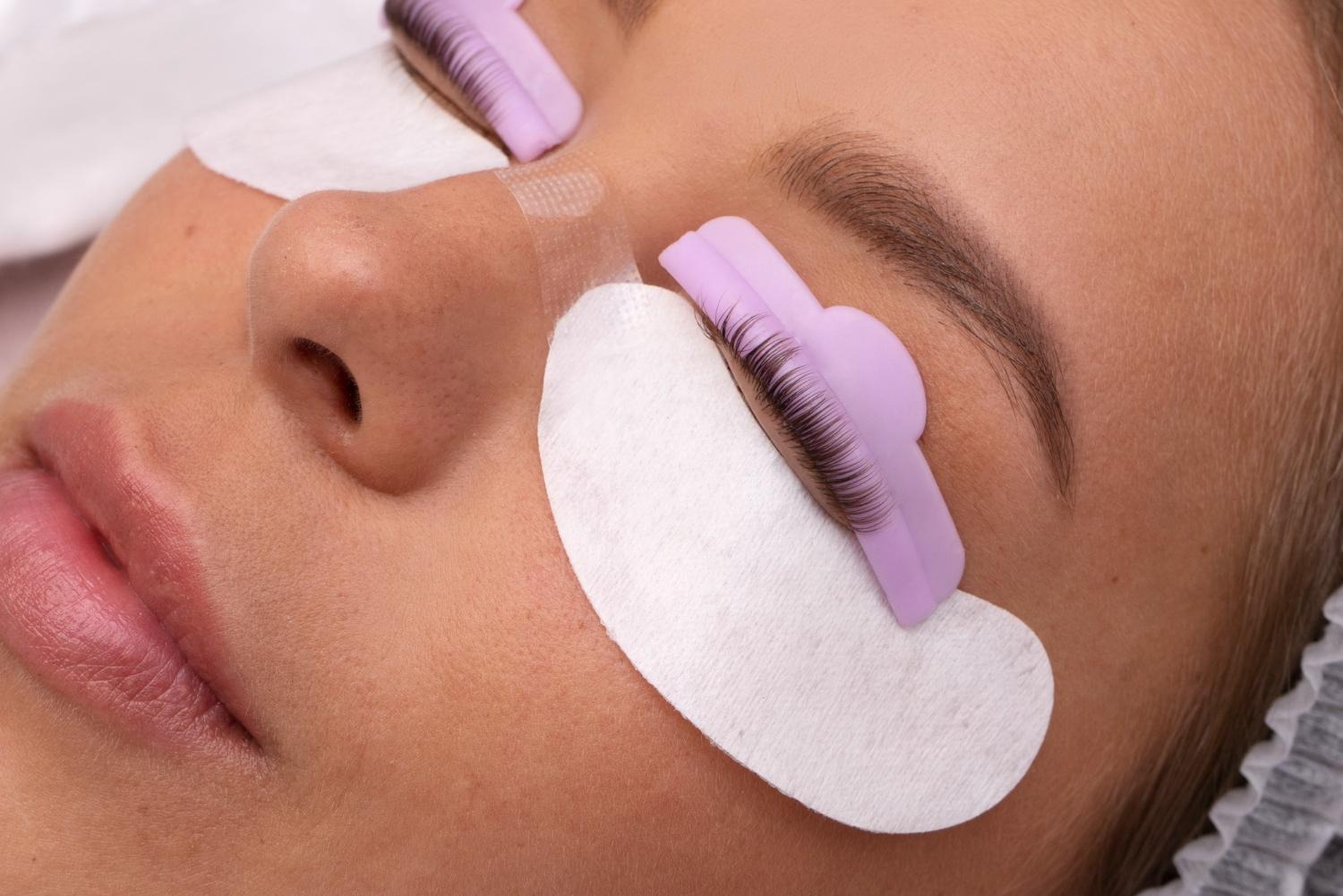
Lash lifts have become one of the most in-demand beauty treatments, promising lifted, curled lashes without extensions or mascara. But what actually happens during a lash lift? How does a straight natural lash suddenly curl and stay curled for weeks?
The answer lies in the fascinating science of hair structure and chemistry. Let’s find out.
Understanding the lash structure
Your eyelashes may look small, but each one is a complex, protein-rich fiber designed to protect your eyes while enhancing your facial features. When you understand how lashes are built, it becomes clear why treatments like lash lifts and extensions work the way they do, and why proper care is so important.
The three main layers of an eyelash
Just like the hair on your head, each lash is made of three distinct layers: cuticle (outer layer), cortex (middle layer), and medulla (inner layer).
The cuticle is the protective shell of the lash. It’s made of overlapping keratin scales, and its job is to shield the inner layers from damage. A smooth cuticle results in healthy-looking, shiny lashes. When the cuticle is compromised (from harsh rubbing, poor aftercare, or chemical over-processing), the lash can look dry, rough, or brittle.
The cortex layer is where the magic happens. This layer makes up the majority of the lash’s thickness since it contains keratin proteins and disulfide bonds. This is the part of the lash that determines its strength, flexibility, and curl pattern.
Not all lashes have a medulla. This layer is a soft, spongy core inside some thicker lash hairs. However, its presence doesn’t significantly affect lash treatments.
Eyelashes consist primarily of keratin, melanin and lipids, and natural oils. Healthy keratin and intact bonds mean strong, lifted, more beautiful lashes.
Benefits of lash lift
Lash lifts have become a beauty favorite because they enhance your natural lashes without extensions, glue, or daily curling. Beyond aesthetics, a lash lift offers a variety of practical and long-lasting benefits.
- Natural, eye-opening results
The main lash lift benefit, according to many women, is the natural eye-opening result. A lash lift works with your natural lashes to create a lifted, curled effect.
It opens up the eyes, making them appear brighter and more awake. It also accentuates your natural lash length and shape and provides a subtle, polished look without heavy makeup.
- Low-maintenance beauty
Unlike lash extensions or daily curling, lash lift results last 6 to 8 weeks, depending on your lash growth cycle. But most importantly, there is no daily styling or heat needed, which makes this treatment perfect for a busy lifestyle or minimal makeup routine.
- No damage when done professionally
When performed by a certified technician using quality products, lashes remain healthy and strong. Having the lashes done professionally also reduces the risk of breakage compared to constant mechanical curling.
- Cost-effective over time
Compared to lash extensions, lash lift treatments require fewer salon visits and no need for constant refills. And as mentioned, this treatment offers long-lasting, natural results without heavy maintenance.
The chemistry behind the curl
If you’ve ever wondered how a lash lift transforms straight lashes into beautifully lifted ones, the answer lies in chemistry. Unlike curling with a mechanical curler, a lash lift changes the lash’s internal structure, creating a long-lasting curl that stays until the lash naturally sheds.
Lashes are built on keratin and disulfide bonds
As already mentioned, each lash is made primarily of keratin, a fibrous protein. The shape and flexibility of the lash are determined by disulfide bonds, which are tiny chemical bridges between protein chains.
This means that in straight lashes, the disulfide bonds are arranged in a way that keeps the lashes flat. And in curly lashes, the bonds are naturally twisted, creating a curl. A lash lift works by temporarily reshaping these bonds.
Step 1: Breaking the bonds
The first step of a lash lift involves applying a lifting solution, which contains a gentle reducing agent (like thioglycolate or cysteamine).
This solution softens the keratin inside the lash, breaks some disulfide bonds, and makes the lash pliable so it can be molded. At this stage, the lash is soft and flexible, ready to take on a new shape.
Step 2: Reshaping the lash
Once softened, the lashes are carefully positioned over a silicone shield or rod.
The shield’s size determines the curl’s intensity. Then, lashes are pressed onto the shield to follow its curve. This molds the lash into the desired shape. At this point, the curl is “set” in its new position but not yet permanent.
Step 3: Rebuilding the bonds
A neutralizing solution is applied next to “lock in” the curl. This solution oxidizes and reforms the broken disulfide bonds. It also hardens the keratin in its new shape and ensures the curl lasts for weeks.
This is why lash lifts last until your natural lashes complete their growth cycle, usually 6 to 8 weeks.
Unlike mascara or mechanical curling, a lash lift physically reshapes the lash’s internal bonds. Once those bonds are reformed, the curl is permanent for that lash until it naturally sheds, making it a low-maintenance way to enhance your eyes.
Are lash lifts safe?
Lash lifts are one of the most popular cosmetic treatments for enhancing natural lashes, but it’s natural to wonder about their safety.
When done correctly, lash lifts are generally considered safe, but understanding the process, potential risks, and precautions is important for achieving healthy, beautiful results.
- Professional application is key
It’s important to reiterate that the biggest safety factor is who performs the procedure. Certified and trained lash technicians know how to apply lifting solutions correctly. Proper technique ensures lashes are curled without damage. Additionally, using professional-grade products reduces the risk of irritation.
On the other hand, DIY kits carry higher risks because improper use can cause burns, irritation, or uneven results.
- The ingredients matter
Lash lift solutions work by temporarily breaking and reforming disulfide bonds in your lashes. Common ingredients include thioglycolate or cysteamine and neutralizers.
Modern formulas often include keratin, peptides, or oils to nourish and strengthen lashes, reducing the risk of dryness or damage.
- Potential side effects
You should know that most side effects are mild and temporary. For instance, you may get eye irritation or redness if the solution touches the skin or eyes. In some cases, allergic reactions occur in sensitive individuals. Also, dry or brittle lashes are a side effect if the lift is over-processed or done too frequently.
A patch test before the treatment can help prevent allergic reactions.
- How to ensure maximum safety
In addition to choosing a certified technician and checking to see if the ingredients used are safe, you should follow the aftercare instructions carefully.
It’s especially important to avoid water, steam, or eye rubbing for the first 24 to 48 hours.
Lash lift vs. other lash treatments
Compared to other treatments, lash lifts are less invasive than extensions, which involve glue and added weight.
Lash lifts avoid daily curling, reducing breakage from mechanical curlers. No chemicals are applied to the eye itself, unlike tints or perm solutions done incorrectly.
Conclusion
A lash lift is more than a beauty treatment. It’s a clever blend of chemistry and artistry. By rearranging the internal bonds of your natural lashes, a technician creates a lifted, eye-opening curl that lasts for weeks without mascara or extensions.
If you love the look of curled lashes but want something low-maintenance and natural, lash lifts are one of the most scientifically impressive treatments in beauty.