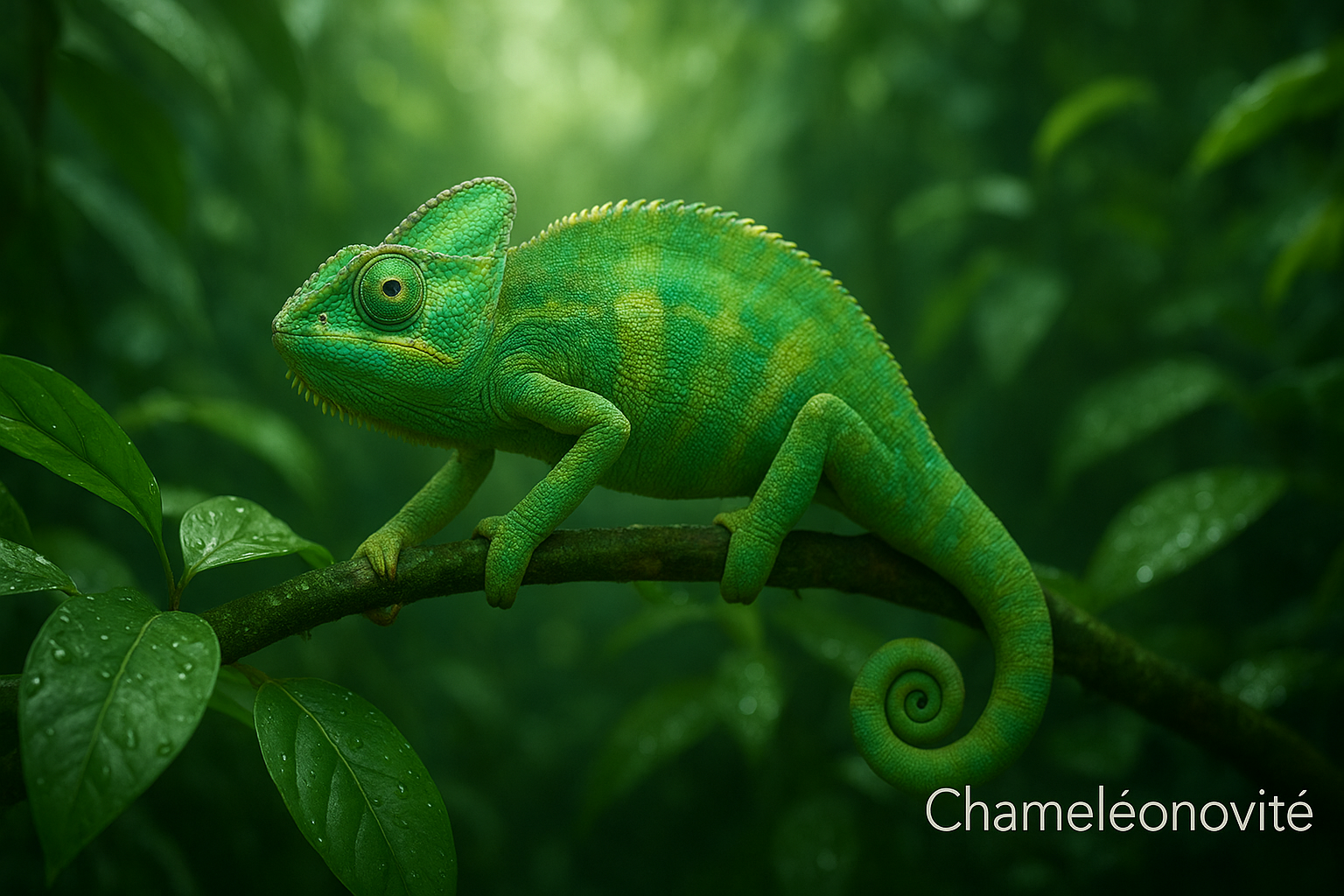
The word chameleónovité refers to the family of reptiles known as Chamaeleonidae, commonly called chameleons. These incredible creatures are famous for their color-changing ability, unique eyes, and slow, graceful movements. Found mostly in Africa and Madagascar, chameleons have amazed scientists and nature lovers for centuries. The family chameleónovité includes over 200 known species, each adapted to its specific environment.
Chameleons are not just masters of camouflage — they are also fascinating examples of evolution and biology. Their independently moving eyes, long sticky tongues, and zygodactylous (two-toed) feet make them one of nature’s most extraordinary reptiles. This article explores everything about chameleónovité, from their biology and habitats to their unique color-changing skills and conservation status. Let’s dive deep into the vivid, mysterious world of these beautiful reptiles.
The Origin and Classification of Chameleónovité
The term chameleónovité comes from zoological classification and refers to the reptile family Chamaeleonidae. These reptiles belong to the order Squamata and the suborder Iguania. Fossil evidence shows that chameleons have existed for more than 60 million years. Most of their species evolved in Africa, particularly Madagascar, where the greatest diversity is found. Over time, the chameleónovité family spread to southern Europe, the Middle East, and parts of Asia. Their classification highlights their ancient lineage and evolutionary success in adapting to various environments.
Unique Physical Characteristics of Chameleons
Chameleons are instantly recognizable for their unique appearance. Members of the chameleónovité family have laterally compressed bodies, which help them blend into branches and foliage. Their feet are specially adapted for gripping — two toes on each side work like tongs to hold branches firmly. Another amazing feature is their prehensile tail, which acts like a fifth limb for balance. But perhaps the most striking trait is their eyes — each can move independently, allowing them to look in two directions at once. This gives them nearly 360-degree vision, a key advantage for spotting predators and prey.
The Science Behind Their Color-Changing Ability
The ability of chameleónovité reptiles to change color is not just for camouflage — it’s also a form of communication and temperature control. Beneath their skin are special cells called chromatophores and iridophores that contain pigments and reflective crystals. When a chameleon experiences changes in light, temperature, or mood, its nervous system signals these cells to expand or contract, shifting the way light reflects from their skin. Males often display bright colors during mating season or when defending territory, while calmer shades help regulate body temperature and hide from predators.
Habitats and Geographic Distribution
Chameleons thrive in diverse habitats, from humid rainforests to dry savannas. Most chameleónovité species live in Madagascar, which is home to over half of the world’s chameleon population. Others inhabit sub-Saharan Africa, southern Europe, India, and Sri Lanka. Each species is adapted to its local climate — forest chameleons prefer lush vegetation, while desert species have lighter coloration for heat reflection. Their arboreal lifestyle keeps them mostly in trees and shrubs, though a few species live closer to the ground in bushes or leaf litter.
Diet and Hunting Techniques
The chameleónovité are skilled hunters that rely on stealth and precision. Their primary diet consists of insects such as crickets, grasshoppers, and flies. Larger species may also eat small birds or lizards. A chameleon’s long, sticky tongue — sometimes longer than its body — is its secret weapon. It can shoot out at lightning speed to catch prey with incredible accuracy. The tongue tip forms a suction cup that sticks to the target and reels it back into the mouth. This lightning-fast mechanism makes chameleons one of the most efficient hunters in the reptile world.
Reproduction and Life Cycle
Reproduction among chameleónovité species varies, but most lay eggs. After mating, females dig small holes in the soil to deposit their eggs, which hatch after several months. The number of eggs depends on the species, ranging from just a few to over a hundred. Some species, like the Jackson’s chameleon, give birth to live young instead of laying eggs. Baby chameleons are fully independent at birth, capable of climbing and feeding immediately. Lifespans differ greatly — smaller species may live only a couple of years, while larger ones can reach over ten years in captivity.
Behavior and Communication
Though they seem quiet and slow, chameleónovité reptiles are expressive in subtle ways. They communicate through body color, body posture, and movements. Males use color displays to warn rivals or attract mates. When angry or frightened, they show darker or more intense colors. Some chameleons hiss or puff up their bodies to appear larger when threatened. Their solitary nature means they rarely tolerate others nearby except during mating season. Despite their calm appearance, they are highly territorial creatures that prefer to live alone.
Conservation Status and Threats
Many chameleónovité species face serious threats due to deforestation, habitat loss, and the illegal pet trade. Forest destruction in Madagascar and parts of Africa has severely reduced their natural habitats. Some species, such as the Parson’s chameleon (Calumma parsonii), are listed as vulnerable or endangered. Climate change and human activities further disrupt their delicate ecosystems. Conservation programs focus on habitat protection and responsible breeding efforts to ensure these remarkable reptiles continue to thrive in the wild.
Importance of Chameleons in Nature
The chameleónovité family plays an important role in maintaining ecological balance. As insectivores, they help control pest populations that might otherwise damage crops or spread disease. Their presence also supports biodiversity by serving as prey for larger animals. In addition to their ecological role, chameleons fascinate scientists studying vision, adaptation, and color biology. They are also cultural symbols in many regions, representing change, patience, and transformation — qualities inspired by their ability to adapt and blend into their surroundings.
Fun Facts About Chameleónovité
- A chameleon’s tongue can be twice the length of its body.
- The smallest chameleon, Brookesia micra, is smaller than a paperclip.
- Chameleons can see ultraviolet light, invisible to humans.
- They cannot hear well but can sense vibrations through their bodies.
- Some species sleep while hanging upside down from branches.
- Contrary to myth, chameleons don’t match the exact color of their background — they change hues mainly for communication and temperature control.
These facts remind us that chameleónovité reptiles are not only beautiful but full of surprising secrets that continue to amaze scientists and nature lovers alike.
Conclusion
The world of chameleónovité is vibrant, mysterious, and full of life lessons. These reptiles symbolize adaptability, patience, and balance in nature. From their stunning ability to change color to their careful movements and sharp hunting skills, chameleons are true marvels of evolution. Protecting them ensures the survival of one of the most fascinating families of creatures on Earth.
FAQs
Q1. What does “chameleónovité” mean?
It refers to the scientific family Chamaeleonidae, which includes all chameleon species.
Q2. How do chameleons change color?
They change color using special skin cells that reflect and absorb light based on mood, temperature, and environment.
Q3. Where are most chameleónovité species found?
The majority live in Madagascar, with others spread across Africa, southern Europe, and Asia.
Q4. What do chameleons eat?
They mainly eat insects like crickets and flies, though larger ones may eat small birds or lizards.
Q5. Are chameleons endangered?
Some species are, mainly due to habitat destruction and illegal trade, but conservation programs are helping protect them.
Q6. Can chameleons make good pets?
They can, but they require very specific care, humidity, and temperature — making them suitable only for experienced reptile keepers.
You Might Also Read: Livcamrips: Meaning, Uses, and Online Impact Explained