Direct-to-Film (DTF) printing is one of the most famous processes of custom apparel production. It can be used on a variety of fabrics. It has greater flexibility and lower setup costs, unlike its traditional counterparts, which are screen-printed or DTG.
If you are new to DTF, here you will find the basics of DTF printing, how it works, its benefits that make it ideal for small businesses and professional print shops, and the equipment you need.
What Is DTF Printing?
Direct-to-Film printing is a digital process in which a design is printed onto a specialised PET film. It is coated with a powder of hot-melt adhesive and then transferred to fabric with the help of a heat press.
It eliminates the constraints of pretreatment, colour restrictions, and the type of fabric that other methods have trouble complying with.
This technology has many options for printing:
· Caps
· T-shirts
· Dark-colored garments
· Hoodies
· Polyester and cotton blends
· Tote bags
Its portability has made it very attractive to both professionals and beginners.
Step-by-Step How DTF Printing Works
A simplified workflow is as follows, to have an idea of how the process works:
Prepare the Design
You can develop an art piece using software such as Illustrator, Photoshop, or CorelDRAW. Mostly, printers find that the mirrored image and CMYK + White setups provide a visible output.
Apply Adhesive Powder
The wet ink is sprayed with hot-melt powder. Once the powder is applied, the film is typically cured either in an oven or a heat press (no pressure). This powder is used to fix the print on the garment through heat pressing.
Print on PET Film
A specialised DTF printer gives the colored print first, followed by a white ink layer. White ink is necessary; it is the guarantee of uniformity of all the colours of fabric.
Heat Transfer to Fabric
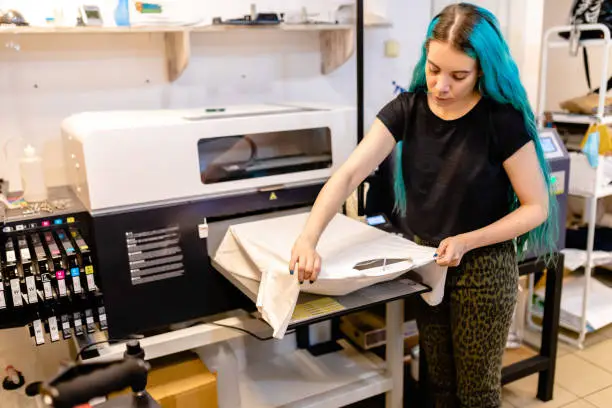
The printed film is embodied on the fabric or garment by using a heat press with standard settings (usually 300-320°F for 15-20 seconds).
Peel and Final Press
The majority of DTF films are cold peel, which implies that one should wait till the film cools before attempting to remove it. A second press is performed after peeling to deepen the colour and make the print softer.
DTF Printing Equipment You Need
In order to begin DTF printing, you will require an entire production system. Here are the primary items:
DTF Printer
A dedicated printer that has the ability to use CMYK + White ink. Some beginners modify Epson printers; however, special DTF printers are more reliable.
PET Films
These are transparent sheets that are heat-resistant and designed to work with DTF ink. The high-quality films enhance the colour vividness and peeling.
DTF Inks
You need CMYK inks of pigment type and thick white ink. The circulation of white ink is essential to prevent clogging.
Hot-Melt Adhesive Powder
It is also known as TPU powder. It has excellent adhesion and stretch capability.
Curing Oven or Heat Press
You need it to melt down the adhesive powder. Better results are achieved with a small curing oven.
Key Strengths Of DTF Printing
DTF printing is getting more attention since most of the shortcomings of screen printing and DTG are corrected by DTF printing.
The following are its most significant strengths:
Highly Durable
DTF prints are prone to cracking, fading, peeling, and stretching.
Works on all fabric types
It works on all types of fabrics like cotton, polyester, nylon, blends, and even performance wear.
Smooth Workflow
It is possible to print patterns in large quantities on film and stamp them when necessary.
No Pretreatment Required
It is time-saving and minimises operational costs.
Cost-Effective for Small Orders
Screen printing requires expensive screens. DTF allows one to print individual pieces without additional arrangement.
Energetic colours on Dark Garments
The white underbase enhances excellent brightness and contrast.
Common Mistakes Beginners Should Avoid
What is DTF printing? It is a major concern raised by beginners. The beginner in custom apparel needs to understand DTF printing, as it is a simple startup. But they may face several major problems:
· Poor setting of temperature may lead to bubbling, poor bonding, or dull colours.
· Low-quality film decreases the quality of the print and results in poor peeling.
· The skipping of the curing process results in poor adhesion.
· Neglecting maintenance on the printers will cause the white ink lines to be clogged.
· Failure to shake a lot of powder results in coarse textures or skid marks.
These problems are avoided by following the proper workflow and with the help of quality materials.
DTF Printing As a Versatile Option
DTF has a superior colour response, takes up less space, and is compatible with a variety of products. So it is an excellent choice if you are interested in a beginner-friendly and more versatile printing option.
It is ideal for:
· Print-on-demand businesses
· Clothing brands
· Home-based printers
· Custom merchandise shops
· Online retailers of customised clothes.
Conclusion
When you need high-quality, reliable, and professional printing results, DTF is one of the best technologies to start with. It offers you a cost-effective, low-startup-cost method that relies on the best results.