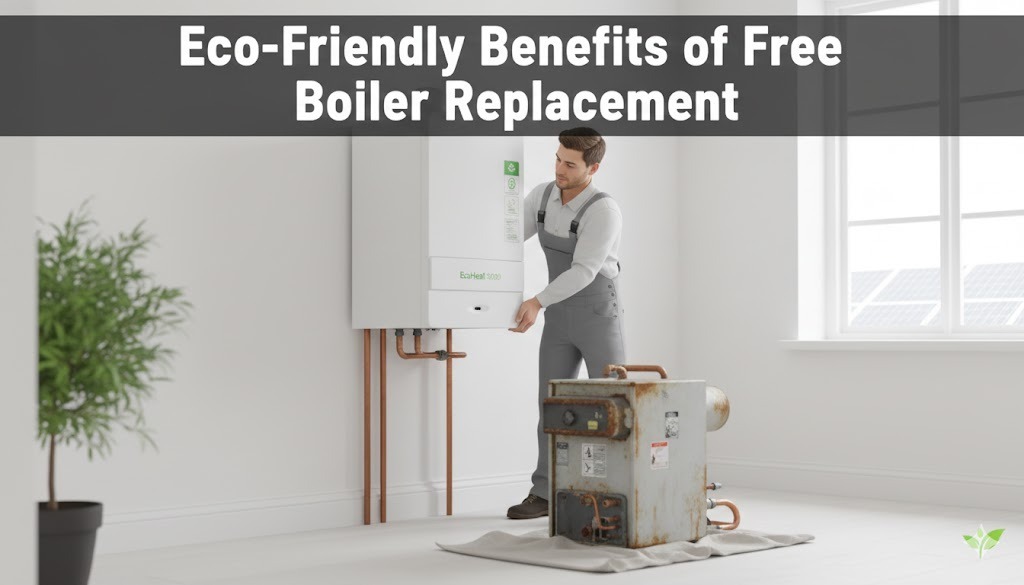
Your old boiler is quietly destroying the planet. Every month it runs, you’re burning cash and pumping carbon into the air. Free boiler replacement scheme exist for one reason: to fix this mess while saving you money.
Here’s what actually happens when you upgrade.
Why Old Boilers Are Environmental Disasters
Think your boiler’s fine because it still works? Wrong. Pre-2005 non-condensing boilers operate at 70-80% efficiency. That means 20-30% of your fuel literally vanishes into thin air.
Modern A-rated condensing boilers hit 90%+ efficiency. They capture exhaust heat that old boilers waste. The difference? Real carbon cuts.
The Numbers Don’t Lie
| Boiler Type | Efficiency | Annual CO2 (tonnes) | Your Savings |
| Old G-rated | 70-80% | 4-6 | £0 |
| New A-rated | 90%+ | 2.8-4.2 | £200+/year |
Upgrading cuts carbon emissions by 30%. An oil-fired boiler pumps out 4-6 tonnes of CO2 yearly. New boilers slash that by using less fuel for the same heat.
Is your heating system single-handedly wrecking your carbon footprint? Probably.
Scale Matters More Than You Think
Home boilers create 14% of the UK’s total carbon emissions. Not cars. Not flights. Boilers.
14 million UK homes, 40% of all households, still run outdated systems. ECO4 scheme target these homes specifically. When scaled nationally, individual upgrades become climate action.
How This Connects to UK Net Zero Targets
The UK is legally committed to net-zero by 2050. Intermediate targets demand 68% cuts by 2030 and 78% by 2035 versus 1990 levels.
Can’t hit these targets without fixing residential heating. It’s the biggest energy hog in most homes.
Free Schemes Aren’t Charity; They’re Strategy
The Boiler Upgrade Scheme alone delivers 1.1 megatonnes of CO2 savings over Carbon Budgets 4 and 5. Lifetime impact? 2.6 megatonnes.
Every inefficient boiler replaced removes a permanent carbon source. This isn’t a feel-good policy. It’s infrastructure for climate commitments.
Government schemes frame this correctly: essential groundwork for 2050 net-zero, not optional home improvement.
Air Quality Benefits Nobody Talks About
Carbon isn’t the only villain here. Old boilers spew nitrogen oxides (NOx) and particulate matter. These cause smog, acid rain, and respiratory problems.
Modern low-NOx burners cut these emissions drastically. Cleaner exhaust means better air, especially in dense neighbourhoods where dozens of old boilers concentrate pollution.
Who Benefits Most?
Kids and elderly residents suffer most from poor air quality. Replacing old boilers in their neighbourhoods directly improves health outcomes.
Think about cumulative effects. One old boiler? Minor issue. Hundreds in a postcode? Major air quality problem solved by systematic replacement.
Breaking Fuel Poverty’s Environmental Trap
Here’s the cruel irony: low-income households with inefficient boilers can’t afford to heat properly OR replace the boiler.
They underheat homes to manage costs. They stay trapped with equipment generating maximum emissions. Fuel poverty creates environmental harm that vulnerable residents can’t escape.
How Free Replacement Changes Everything
Remove the upfront cost barrier, and these households access efficiency immediately. New boilers cut heating bills by 30%; roughly £200 annually for G-to-A-rated upgrades.
That £200 means financial breathing room AND lower carbon output. The environmental equity matters: climate benefits reach households unable to self-fund upgrades.
Why should only wealthy homeowners achieve efficiency gains? Free schemes prevent climate action from deepening inequality.
Durability Creates Hidden Environmental Wins
Modern boilers last longer with less maintenance. Fewer breakdowns mean fewer emergency replacements.
What’s the environmental cost of manufacturing and shipping replacement units? Higher than you’d think. Durable boilers reduce this embodied carbon over their lifecycle.
Future-Proofing Your Heating
New boilers integrate with renewable systems: solar thermal, heat pumps, and hybrid setups. You’re not just replacing a boiler. You’re building infrastructure for further decarbonization.
Old boilers lock you into fossil fuel dependence. Modern ones give you options.
Who Gets Access and Why It Matters
Wealthy households have already upgraded independently. Vulnerable populations needed institutional support.
Government energy company obligations provide free replacements to eligible homes. This democratizes carbon reduction, a non-negotiable principle for legitimate climate action.
Can’t blame fuel-poor households for inefficient heating when financial barriers block alternatives. Systemic solutions beat individual blame every time.
The Bottom Line
Free boiler replacement delivers:
- 30% carbon emission cuts per household
- Direct support for net-zero targets through measurable CO2 reductions
- Improved local air quality via low-NOx technology
- £200+ annual savings for eligible households
- Long-term environmental gains through durability and renewable compatibility
14 million UK homes qualify for upgrades under ECO4 and similar schemes. Each replacement removes a persistent carbon source while improving household finances.
Environmental progress aligns with social equity when schemes target those who need support most. Your upgrade contributes to national climate goals while cutting your bills. That’s not a compromise. That’s how climate action should work.