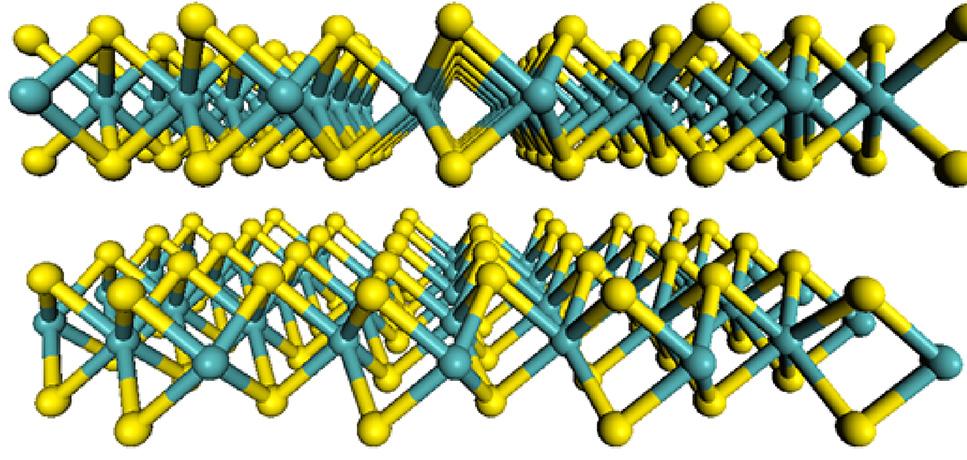
Molybdenum disulfide (MoS₂) is a layered two-dimensional material. Each layer is made of a molybdenum atom sheet sandwiched between two sulfur atom sheets, with weak van der Waals forces holding the layers together. This unique structure gives MoS₂ a range of tunable physical and chemical properties, making it useful in several important areas—from industrial lubrication and electronics to energy storage and catalysis.
1. Use in Lubrication
The layered structure of Molybdenum disulfide (MoS₂) allows the sheets to slide easily over each other under shear stress, giving it good solid lubricating properties. Unlike liquid lubricants, MoS₂ remains stable under extreme conditions—high temperature, high pressure, vacuum, or corrosive environments.
In aerospace, MoS₂-based lubricants are used in critical parts like engine components and landing gear to reduce friction and wear. In the automotive industry, adding MoS₂ to engine oil or gear oil can improve fuel economy by about 5–10% and reduce engine wear by around 30%. It can also be applied as a surface coating on mechanical parts to extend their service life.
2. Potential in Electronics
As a two-dimensional semiconductor, MoS₂ has a direct bandgap, relatively high carrier mobility, and a good on/off ratio, which has drawn interest in microelectronics. Research shows that MoS₂-based field-effect transistors (FETs) can maintain strong performance even at ultrathin sizes, making them promising for future smaller, lower-power logic and memory devices.
MoS₂ is also flexible and biocompatible, which makes it suitable for flexible electronics and wearable sensors—like those used to monitor heart rate, blood pressure, and other body signals.
3. Role in Energy Storage and Catalysis
In lithium-ion batteries, MoS₂ is seen as a potential anode material due to its high theoretical capacity (about 670 mAh/g). By nanostructuring or combining it with carbon materials, researchers can reduce volume expansion during charging and discharging, improving cycling stability.
In electrocatalysis, the edge sites of MoS₂ show noticeable activity for the hydrogen evolution reaction (HER), making it a lower-cost alternative for water splitting to produce hydrogen. Its catalytic performance can be tuned further through doping or defect engineering.
4. Other Industrial and Research Uses
In machining, adding MoS₂ to cutting fluids can reduce tool wear and improve surface quality. In the chemical industry, it can be used as a catalyst in processes like hydrodesulfurization to remove sulfur from fuels.
MoS₂ nanomaterials are also being studied for biomedical imaging and drug delivery, though their safety still needs thorough evaluation.
In Summary
Thanks to its layered structure and tunable electronic, mechanical, and chemical properties, MoS₂ is now a widely studied material across multiple fields. It’s already used in industries like lubrication and catalysis, and holds promising potential in emerging areas such as electronics, energy, and biomedicine.
Moving forward, research will focus on improving how it’s made, fine-tuning its properties, and finding new ways to integrate it into technology—helping it play an even bigger role in innovation and industry.