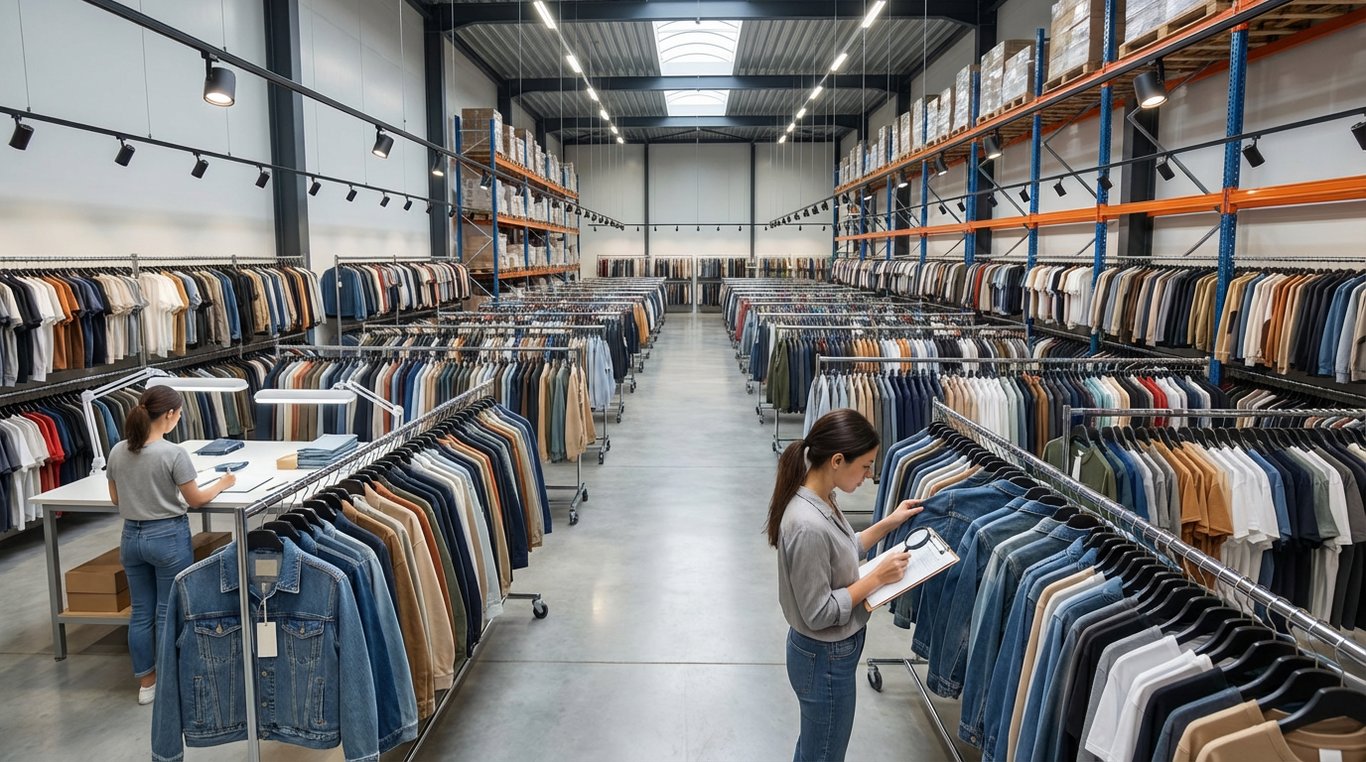
Whether you’re launching a new boutique or expanding an existing line, understanding the nuances of apparel sourcing, wholesale options, and manufacturer relationships can significantly impact your bottom line.
This guide provides actionable strategies for small business owners and fashion boutique operators to navigate the complexities of sourcing, ensuring quality, cost-effectiveness, and ethical practices every step of the way.
Understanding apparel sourcing fundamentals
What is apparel sourcing?
Building a successful fashion brand requires more than creative designs—it demands a strategic approach to finding and working with the right production partners. Apparel sourcing encompasses identifying suppliers, evaluating manufacturing capabilities, and establishing relationships that transform concepts into finished garments. This discipline balances competing priorities: maintaining quality standards while managing costs, meeting production deadlines without compromising craftsmanship, and ensuring ethical practices throughout your supply chain.
Key components of successful sourcing strategy
- Material Selection: Influences both aesthetic appeal and functional performance, requiring knowledge of fiber properties, fabric construction, and finishing techniques
- Geographic Considerations: Affect shipping timelines, communication efficiency, and production costs
- Production Volume Capabilities: Determine whether a manufacturer can accommodate your current needs while scaling alongside your brand’s growth
With a solid grasp of fashion sourcing fundamentals, the next step is exploring the various wholesale options available to your brand.
Wholesale clothing options for your brand
Different wholesale clothing models
- Direct Factory Partnerships: Provides the greatest control over specifications and potentially lower per-unit costs, though this approach typically requires larger order commitments and more hands-on management
- Wholesale Distributors: Serve as intermediaries, offering curated selections from multiple manufacturers with more flexible order quantities—ideal for boutiques testing market response or brands seeking variety without managing numerous factory relationships
- Private Label Suppliers: Produce unbranded garments that you can customize with your labels, tags, and packaging, allowing emerging brands to establish market presence quickly without investing in full custom production
How to evaluate wholesale vendors
- Examine their product quality through samples
- Verify their reliability through client references
- Clarify terms regarding minimum orders, payment schedules, and return policies
Once you’ve considered your wholesale clothing options, the next critical step is finding the right clothing vendors to bring your designs to life.
Finding the right clothing manufacturers
Methods to identify qualified clothing manufacturers
- Use online directories like Maker’s Row, Thomasnet, and ApparelSearch to filter by specialty, location, and production capabilities
- Attend industry trade shows such as Magic Las Vegas, Texworld USA, and Sourcing at Magic for face-to-face connections
- Leverage professional networking through LinkedIn groups and Reddit communities like r/StreetwearStartup
- Contact local Chambers of Commerce and regional economic development agencies for manufacturer information
Criteria for vetting potential manufacturing partners
- Relevant Specialization: Factories often focus on particular categories—activewear, denim, outerwear, or technical textiles
- Geographic Expertise: Los Angeles for denim and casual wear, New York City for high-end designers, North Carolina for textile heritage in Charlotte and Greensboro, Georgia for performance fabrics and activewear
- Production Capacity: Ability to handle your order volume while maintaining quality standards
- Quality Control Systems: Established inspection protocols and consistency measures
Understanding the intricacies of apparel manufacturing processes is essential for effective collaboration with your chosen clothing suppliers.
Apparel manufacturing processes and production
Stages of apparel manufacturing from design to finished product
- Pattern Development: Technical designers translate sketches into precise templates that guide fabric cutting, accounting for seam allowances, grain lines, and sizing specifications
- Material Preparation: Fabric inspection to identify flaws before cutting begins, with fabric laid in multiple layers and cut according to patterns
- Sewing Operations: Cut pieces are bundled and routed to specialized machinery and skilled operators who assemble garments through various stitching techniques
- Finishing Processes: Pressing to remove wrinkles, trimming excess threads, and adding embellishments such as buttons, zippers, or embroidery
- Quality Inspections: Multiple checkpoints examining fabric integrity, seam strength, and overall construction before garments proceed to packaging
Different production methods and their impact
- Cut-Make-Trim: Involves outsourcing only cutting and sewing while retaining control over design and materials
- Full-Package Production: Encompasses the entire manufacturing process from sourcing materials through final delivery
With a clear understanding of clothing production, you’ll want to carefully evaluate potential garment factories and clothing facilities.
Evaluating garment factories and clothing facilities
Factors to assess when auditing a garment factory
- Examine production capacity—can the facility handle your order volume while maintaining quality standards?
- Understand their specialization areas, as factories focusing on specific garment categories typically deliver superior results
- Scrutinize quality control infrastructure and inspection protocols at each production stage
- Request documentation of quality standards and review recent inspection reports
- Verify adherence to fair labor practices, safe working conditions, and environmental standards
- Conduct factory visits for firsthand observation of working environments and employee treatment
How to verify compliance, capacity, and quality standards
- Quality Documentation: Request inspection reports and quality standard documentation
- Ethical Compliance: Verify through third-party audit reports or certifications demonstrating compliance with recognized standards
- Facility Assessment: When in-person visits aren’t feasible, request comprehensive facility documentation and virtual tours
For brands seeking a streamlined entry into the market, private label clothing and custom manufacturing offer compelling options.
Private label clothing and custom manufacturing
Advantages of private label clothing for emerging brands
Private label clothing arrangements offer emerging brands a strategic entry point into the market without requiring substantial manufacturing infrastructure investment. This model allows you to select from existing designs produced by manufacturers, then customize them with your branding, labels, and packaging. The approach provides faster time-to-market compared to fully custom production while maintaining brand identity through distinctive presentation.
Customization options and minimum order quantities
- Basic Private Label: Adding your labels and hang tags to standard garments
- Comprehensive Programs: Design modifications, fabric selection, custom sizing, and unique trim details that differentiate your products
- Custom Manufacturing: Creating garments built entirely to your specifications, requiring detailed technical packages including design sketches, measurement specifications, material requirements, and construction details
Ultimately, building successful partnerships with apparel suppliers is key to long-term growth and sustainability.
Building successful partnerships with apparel suppliers
Sustainable supplier relationships transcend transactional interactions, evolving into collaborative partnerships that drive mutual success. These connections require intentional cultivation through consistent communication, aligned expectations, and shared commitment to quality and ethical practices.
Communication practices that strengthen manufacturer relationships
- Establish clear communication protocols including preferred contact methods, response time expectations, and escalation procedures
- Schedule regular check-ins to maintain alignment on production progress and address emerging challenges proactively
- Maintain transparency about your business goals, growth projections, and market challenges
- Provide comprehensive technical packages that eliminate ambiguity about materials, construction methods, and quality standards
- Document all agreements regarding pricing, payment terms, delivery schedules, and quality acceptance criteria
How to negotiate terms and ensure long-term collaboration
- Ethical Alignment: Seek partners who share your commitment to fair labor practices, environmental responsibility, and social accountability
- Long-term Benefits: Demonstrate commitment through consistent order volumes, prompt payment, and reasonable lead time expectations to earn preferential pricing and priority production slots
- Performance Recognition: Acknowledge exceptional performance through bonuses, increased order allocations, or public acknowledgment
- Flexibility: Maintain realistic expectations, communicate changes promptly, and work collaboratively through difficulties to earn supplier loyalty
Sourcing success
Mastering apparel sourcing requires a blend of strategic planning, diligent research, and strong relationship-building. By understanding the fundamentals, exploring wholesale options, and carefully vetting garment manufacturers, you can establish a reliable supply chain that supports your brand’s growth. Prioritize clear communication, ethical practices, and collaborative partnerships to foster long-term success. As you navigate the apparel sourcing landscape, remember that informed decisions and proactive management are your greatest assets in building a thriving fashion business.